

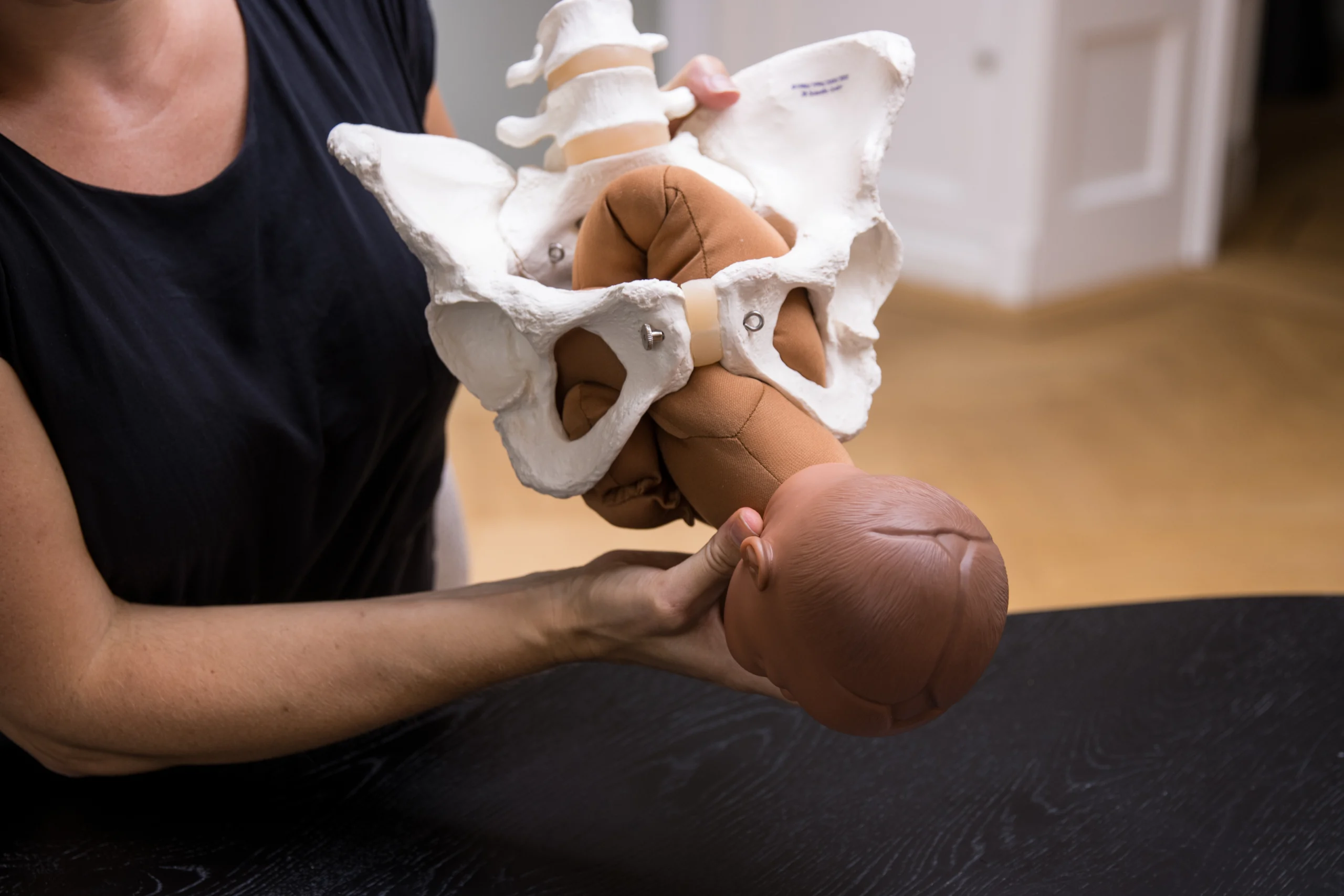
Labour progresses through clearly distinguishable stages, and knowing what happens in each stage helps you feel less uncertain going into it. Below is an overview. Every birth is different, and the length of each stage can vary considerably from person to person and from birth to birth.
Latent phase: the build-up
The latent phase is the build-up: irregular contractions that gradually become stronger and more regular. This can last hours, sometimes even days, and the cervix slowly dilates to about 3 to 4 centimetres. During this phase you can often simply stay at home, look for distraction and rest where you can. Try to carry on with your everyday activities as much as possible, eat and drink when you feel like it, and save your energy for later.
Active labour: the real work begins
From about 4 centimetres we speak of the active phase: contractions become more regular, more intense and more frequent, and dilation speeds up. This is usually the moment to contact your midwife. Read exactly when to call here. Birthing positions and breathing techniques can make all the difference in this phase, as can other forms of pain relief. Many people notice that they turn inwards during this phase and feel less need to talk: that’s a perfectly normal response.
Transition: the hardest, shortest part
Between full dilation and the pushing stage there’s often a short, intense transition phase: contractions are at their strongest, and many people feel overwhelmed for a while or think ‘I can’t do this any more’. This is usually a sign that the birth is close. Especially in this phase, support from your partner or birth companion is valuable: someone who helps you through it and reminds you that this feeling will pass.
Pushing: the birth
In the pushing stage you actively push along with the contractions to help your baby be born. This can take anywhere from a few minutes to a couple of hours, depending on things like your position, the baby’s position and whether this is your first birth. Your midwife or obstetrician guides you through this and tells you when and how best to push.
Afterbirth: the placenta
After your baby is born comes the afterbirth: the placenta separating and being delivered, usually within half an hour of the birth, often helped by mild contractions. This moment is often used for the first skin-to-skin contact with your baby, which is calming for both of you.
If things go differently
Not every birth follows this pattern exactly: an induction may be needed, things may go faster or slower, or there may be reason for extra medical support. Your midwife or obstetrician will guide you through any deviation from this pattern.
Would you like to go through these stages together and learn how best to get through them? Take a look at the pregnancy course or book a free introductory chat for personal support during your birth.