

Moving and regularly changing position can help you cope better with contractions and give your baby room during labour. With upright positions and movement, gravity and asymmetry in the pelvis can help your baby descend. In this way, different positions support your baby in making the movement and rotation through the birth canal. Staying in the same position for a long time, and especially lying flat on your back, can actually make this harder.
There’s no single position that works best for everyone or for every stage of labour. It’s mainly about alternating, trying things out and feeling what’s comfortable at that moment. Moving and changing position are, just like breathing, natural forms of pain relief during labour. Your body is wise and often tells you surprisingly well which position feels helpful at that moment.

Which birthing positions can you try?
-
Standing or walking: gravity can help, while movement in the pelvis supports your baby’s descent.
-
On hands and knees (all fours): often relieves pressure on the lower back. This position also makes it easy for your partner or doula to provide counter-pressure.
-
Sitting on a birth ball: allows movement in the pelvis without requiring too much energy.
-
Leaning against your partner during a contraction: can provide support and gives your partner a lovely, active role during the birth.
-
Side-lying: a restful position that can be combined well with taking a break and relaxing between contractions.
Why moving and changing position helps
Being stuck lying in one position can make contractions feel heavier, while moving and changing position often brings relief and can help labour progress. There’s no one right position: it’s about trying out what feels best for you at that moment. Above all, trust your own body: the position that feels most natural at that moment is often also the one that works best, even if it doesn’t always seem the obvious choice. If you feel unsure about what to do, feel free to ask your midwife, doula or maternity nurse to try a position together. Also read my personal blog about relaxed positions during labour for more inspiration.
Combine with breathing and a course
Birth positions work best when combined with breathing techniques. Both are most effective when practised beforehand, for example during the one-day pregnancy course together with your partner.
This way, you build up a repertoire of positions and breathing techniques that you can draw on during labour. Once labour begins, there’s a good chance these will come more naturally and automatically, helping you cope with the contractions as comfortably as possible.
Support during the birth itself
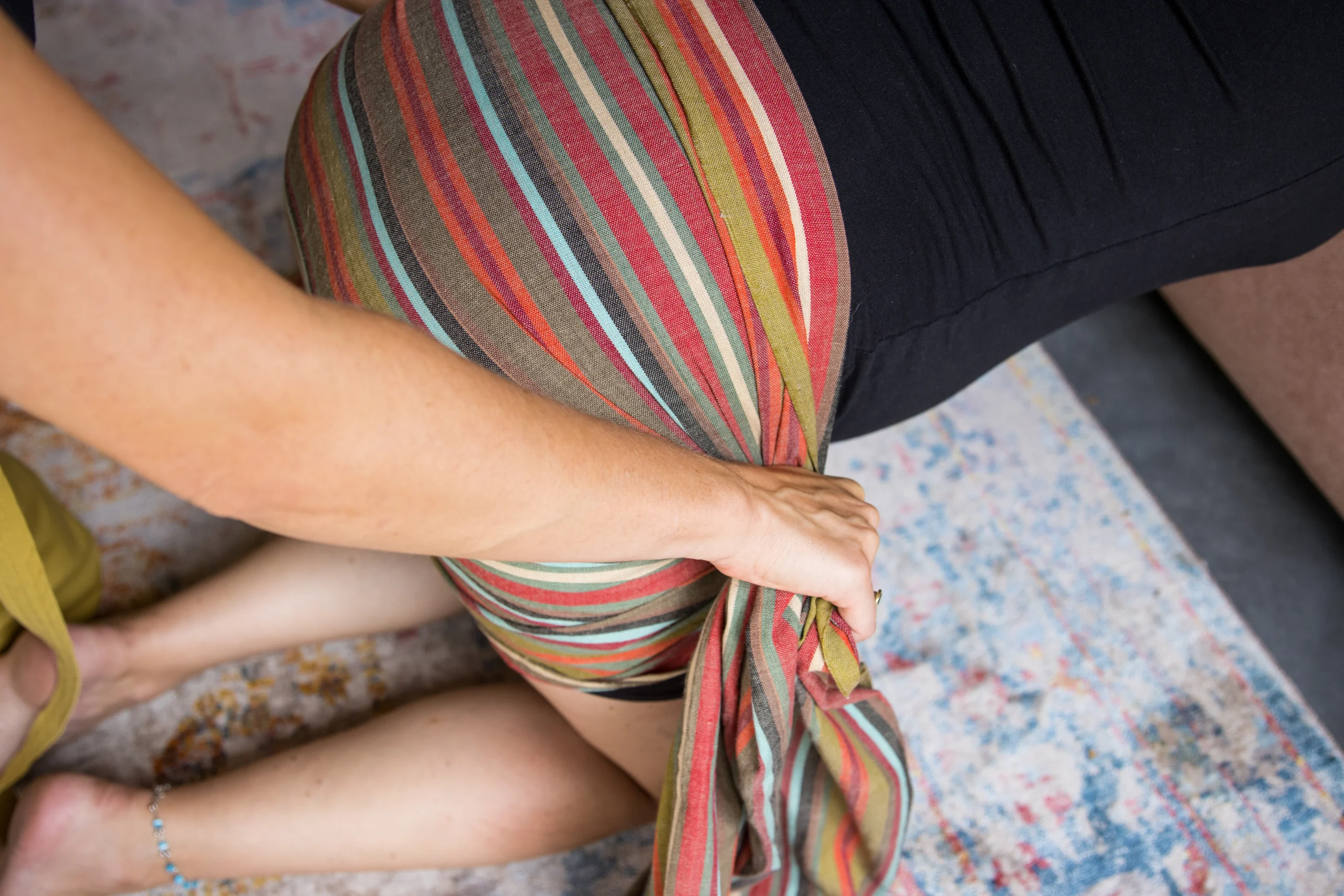
During labour, it can make a big difference to have someone by your side who knows different positions and can actively support you in changing positions at the right moments. Especially when your partner is experiencing a birth for the first time too.
Often, thinking about which position to try next is the last thing you feel like doing during labour. That’s when it can be especially valuable to have someone who knows which positions may support you and your baby, and who can gently guide you into them.
Would you like to practise birthing positions and breathing properly in advance, so you don’t have to think about them during labour? Take a look at the pregnancy course or book a free introductory chat for personal support.